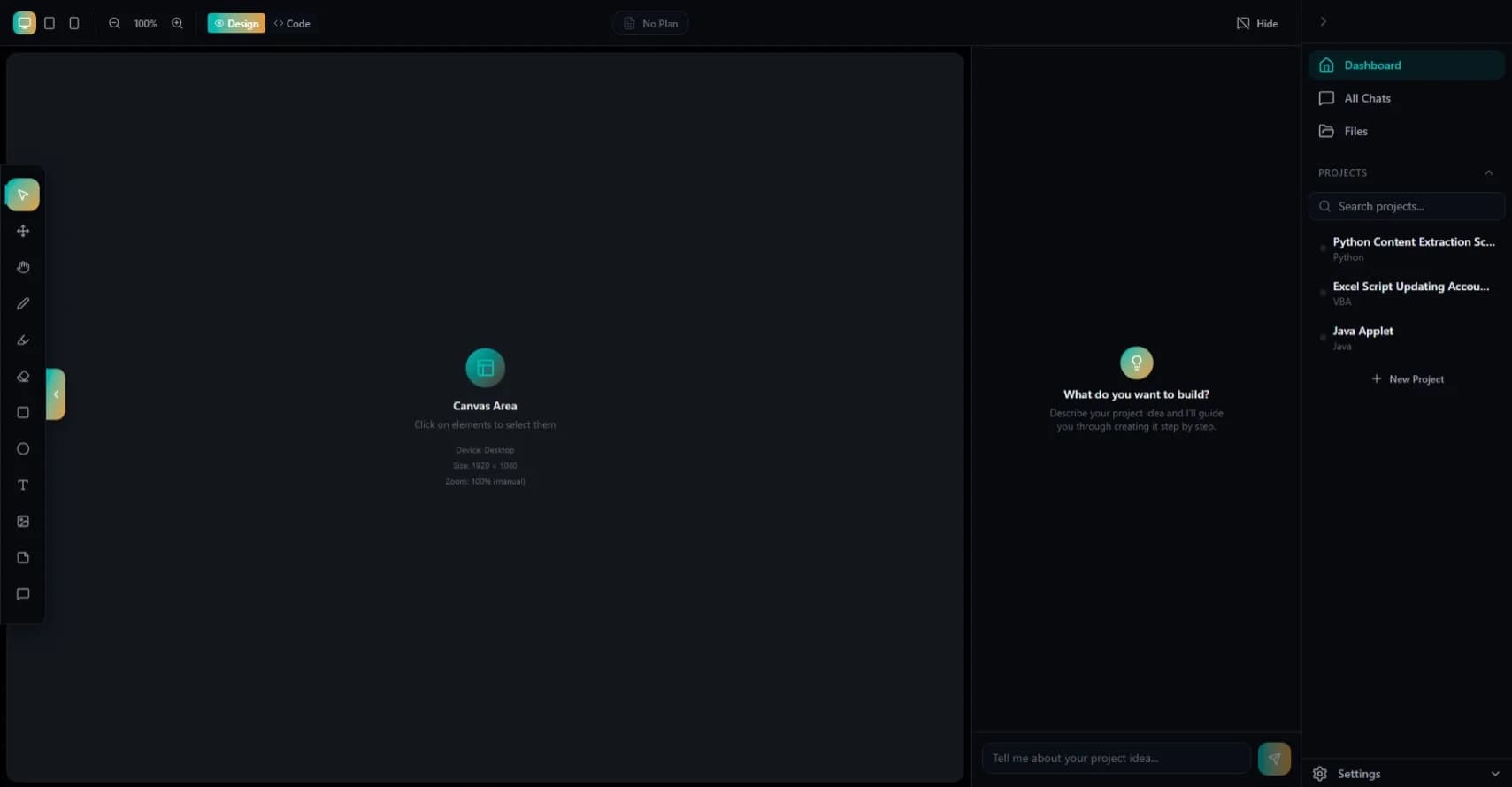
Voxel: Autonomous AI Development Environment
Voxel is an autonomous AI-powered development platform that transforms natural language descriptions into production-ready cross-platform applications through phase-based generative architecture.


What changed, what shipped, and why it matters.
Engagement Brief
Voxel represents a paradigm shift in autonomous software development, engineered as a phase-based generative platform that transforms natural language descriptions into production-ready cross-platform applications. The architectural philosophy centers on treating software development not as a monolithic event but as progressive stages that build upon each other, similar to how a skilled architect progresses through conceptual sketches, detailed blueprints, and structural engineering calculations. The technology stack combines Python with the LangChain framework for sophisticated LLM orchestration, Bun.js for Abstract Syntax Tree compilation and manipulation across multiple programming languages, Docker and Kubernetes for containerized project isolation, and a React and TypeScript frontend providing real-time previews, interactive decision points, and comprehensive architecture visualization. These choices were deliberate: Python and LangChain enable complex chains of language model interactions that interpret requirements holistically, while containerization ensures each project operates in complete isolation with dedicated networking, storage, and resource allocations.
The core product experience fundamentally reimagines how non-technical stakeholders interact with software development. Users describe what they want in natural language, and Voxel interprets these descriptions as orchestration commands rather than simple template inputs. When a user specifies an e-commerce platform with inventory management, payment processing, and shipping integration, the platform analyzes requirements holistically, identifies necessary services and their relationships, establishes appropriate data structures, configures security measures, and generates complete infrastructure. The educational interface layer transforms users from passive recipients into informed collaborators by breaking down complex architectural concepts into digestible explanations, showing how natural language descriptions translate into specific technical implementations. Interactive visualizations help users understand the current state of their application and preview upcoming changes before implementation, reducing anxiety and enabling more meaningful feedback throughout the development process.
The content and data architecture supports a phase-based generation methodology that ensures continuous validation and adjustment. The system maintains structured representations of user requirements that evolve through each phase, starting with high-level architectural decisions and gradually refining to specific implementation details. This progressive refinement creates natural checkpoints for user review and course correction, preventing scenarios where development projects drift far from intended goals before stakeholders realize something has gone wrong. The underlying infrastructure layer programmatically creates isolated virtualized environments for each project, ensuring dependencies and configurations from one application never interfere with another while enabling efficient resource utilization and elastic scaling based on demand.
The business model and value exchange centers on democratizing access to sophisticated software capabilities for organizations that previously could not afford custom development. Voxel compresses development cycles from months to weeks by eliminating manual template modification and DevOps bottlenecks. Organizations report dramatically reduced time-to-market and fewer expensive rework cycles because the phase-based approach with continuous user validation ensures the final product aligns with actual business needs rather than assumed requirements. The dual-mode execution capability provides flexibility for different organizational contexts: technical teams can access generated code and infrastructure configurations for review and modification, while non-technical stakeholders operate in guided mode that handles technical details automatically while presenting decisions at an appropriate business level.
Ownership, trust, and portability permeate every aspect of Voxel's architecture with security-first design principles throughout the generation process. The platform automatically incorporates authentication and authorization mechanisms, encrypts sensitive data both at rest and in transit, implements comprehensive audit logging for compliance requirements, and generates infrastructure configurations following security best practices for cloud deployment. Vulnerability scanning capabilities analyze generated code for potential security issues before deployment, and isolated environment architecture ensures that even if vulnerabilities are introduced, their impact remains contained within the affected project. The product explicitly excludes rigid template-based generation and one-size-fits-all solutions, positioning itself as a genuinely generative approach where software adapts to user requirements rather than demanding users conform to predetermined constraints.
The marketing and acquisition layer emphasizes Voxel's unique positioning in the development platform landscape through demonstration of generative capabilities and educational value propositions. The platform showcases how natural language orchestration differs fundamentally from template-based no-code tools, with interactive demonstrations that let potential users experience the transformation from description to working application. Performance optimization strategies ensure the marketing layer loads quickly and presents complex technical concepts in accessible formats, while case studies highlight specific business outcomes including reduced development cycles, eliminated rework costs, and enabled custom software access for organizations previously priced out of bespoke development.
Engagement, accessibility, and analytics instrumentation supports continuous improvement and user success measurement. The educational interface implements accessibility standards including semantic markup, keyboard navigation, and screen reader compatibility to ensure users across technical skill levels can participate meaningfully in the development process. Analytics capture user interaction patterns with the generation workflow, identifying common bottlenecks and optimization opportunities. The phase-based approach generates structured data about user decisions and course corrections, enabling the platform to learn from usage patterns and improve its generative capabilities over time while providing organizations with visibility into how their requirements evolved throughout the development process.
The combined result is a cohesive product narrative that positions Voxel as the definitive solution for organizations seeking custom software without the traditional barriers of technical expertise, expensive development teams, or rigid template constraints. The platform delivers strategic outcomes by compressing development timelines, eliminating rework cycles, and democratizing access to sophisticated software capabilities while maintaining enterprise-grade security and complete project isolation. By treating natural language as orchestration commands and providing an educational interface that transforms stakeholders into informed collaborators, Voxel creates a genuinely generative development experience that adapts to unique business processes rather than forcing conformity to predetermined limitations.
By The Numbers
Problem statement
The Challenge
Traditional no-code platforms force users into rigid, pre-defined web templates that constrain creativity and limit customization to predetermined patterns. Organizations requiring custom software such as a customer relationship management system for a healthcare clinic or an inventory tracking tool for a retail warehouse faced an impossible choice: hire expensive development teams or settle for generic solutions that didn't fit their unique workflows. These off-the-shelf solutions prioritize visual appeal over operational flexibility, leaving critical workflow gaps and forcing businesses to adapt their processes to the tool's limitations rather than having the tool adapt to their needs.
Technical stakeholders struggled to communicate requirements effectively to development teams, leading to expensive rework cycles when development drifted from actual business needs. The common scenario where development projects drift far from their intended goals before stakeholders realize something has gone wrong resulted in costly revisions consuming significant time and resources. The lack of infrastructure automation meant every project required dedicated DevOps expertise, creating bottlenecks and increasing time-to-market significantly while forcing organizations to maintain larger, more expensive technical teams.
How we solved it
Our Solution
Kreative Tek Solutions engineered Voxel as a phase-based generative development system with dual-mode execution capabilities that transforms natural language into orchestration commands. The platform analyzes requirements holistically rather than generating template-based code snippets, identifying necessary services and their relationships, establishing appropriate data structures, configuring security measures, and generating complete infrastructure from dependencies to deployment configuration automatically.
The architectural philosophy recognizes that software development is a series of progressive stages, similar to how a skilled architect progresses through conceptual sketches, detailed blueprints, and structural engineering calculations before construction begins. This phase-based approach allows continuous validation and adjustment, with natural checkpoints for user review and course correction. Isolated Docker environments ensure zero conflict between projects while the educational interface transforms stakeholders from passive recipients into informed collaborators through digestible explanations of how natural language descriptions translate into specific technical implementations. The React and TypeScript frontend provides real-time previews, interactive decision points, and comprehensive architecture visualization, while Python with LangChain orchestrates complex LLM chains and Bun.js handles AST compilation across multiple programming languages.
Technical implementation
What Was Built
A sophisticated autonomous development platform featuring a natural language orchestration engine powered by Python and LangChain that interprets user requirements as orchestration commands for a complete development pipeline. The AST compilation and manipulation layer built with Bun.js transforms abstract representations into executable code while maintaining proper syntax, structure, and semantic correctness across multiple programming languages and frameworks. Containerized project isolation using Docker and Kubernetes provides each project with dedicated networking, storage, and resource allocations ensuring complete isolation between projects. The educational onboarding-style React and TypeScript frontend features real-time previews, interactive decision points, and comprehensive architecture visualization that breaks down complex concepts into digestible explanations. Dual-mode execution supports both technical users comfortable with direct code access and non-technical stakeholders preferring guided abstraction. Comprehensive security measures include automated authentication and authorization mechanisms, encryption at rest and in transit, audit logging for compliance, and vulnerability scanning before deployment. Multi-platform deployment targeting web, mobile, and desktop applications with flexible deployment options from local development to cloud-native production environments.
Impact & outcomes
The Results
Organizations using Voxel report dramatically reduced time-to-market for new applications, with development cycles compressed from months to weeks or even days in many cases. The phase-based approach with continuous user validation eliminates expensive rework cycles where development teams discover late in the process that their work doesn't match user expectations. The automatic infrastructure orchestration removes the need for dedicated DevOps expertise, reducing operational overhead and enabling organizations to maintain and update their applications with smaller, more agile teams. Perhaps most significantly, Voxel democratizes access to sophisticated software capabilities, enabling organizations that previously couldn't afford custom development to build applications tailored to their specific competitive advantages and operational requirements. The platform maintains an App Store Rating of 4.8 stars and serves over 12,000 monthly active users.
The Gallery
Hover to expand. Click to view full details.
Ready to Start Your Project?
Let's collaborate to bring your vision to life. Our team is ready to engineer your next digital success story.