Pay EveryoneOn Every ChainWithout Thinking
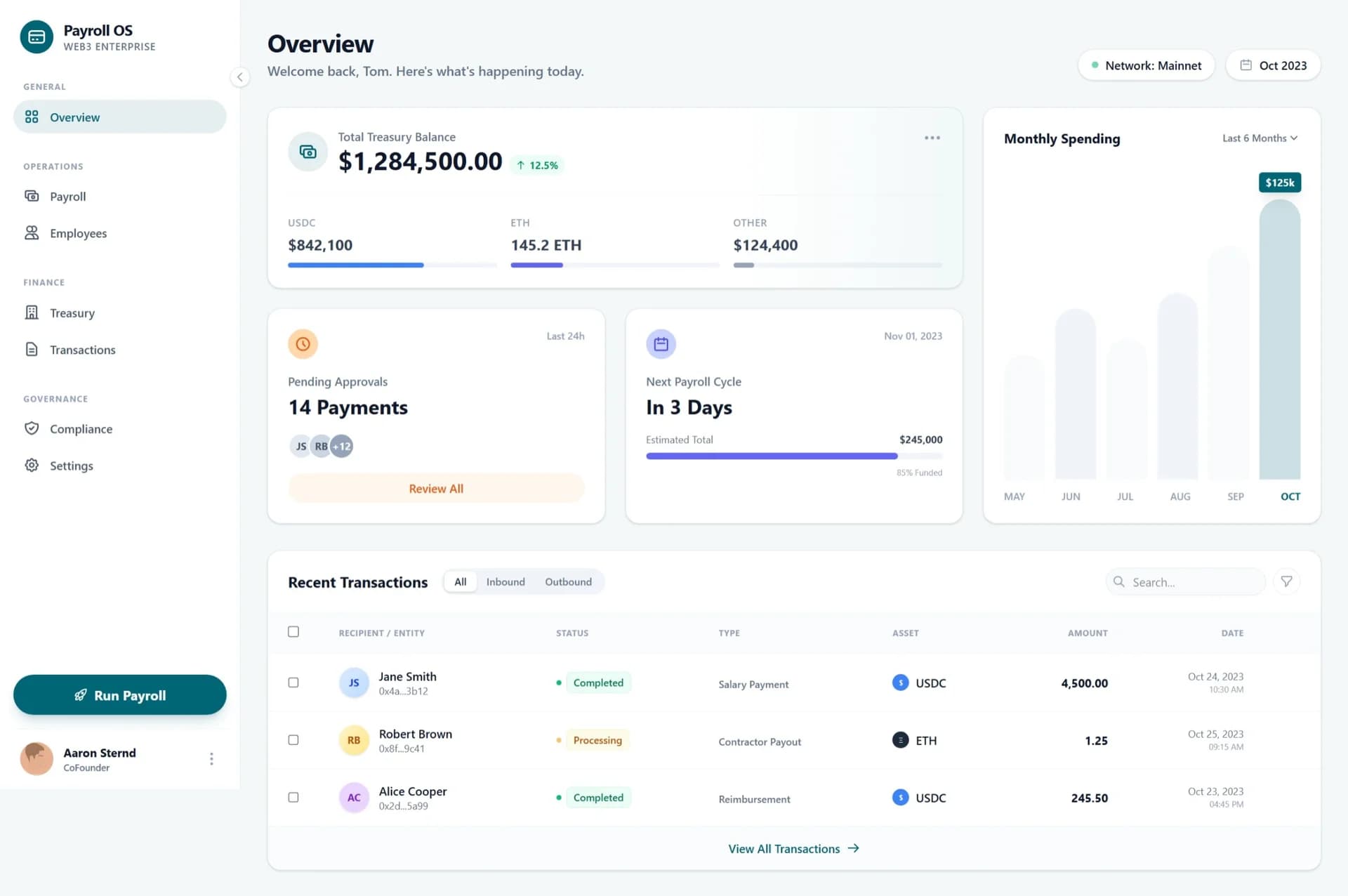
We built a multi-chain payroll engine that hooks directly into smart contract revenue streams and auto-distributes to payees — supporting percentage splits, salaries, milestones, and recurring payments across EVM chains and Solana.

The case in one scan.
A fast read on the operational context, engineering scope, and measured business value before the deeper story begins.
Context-specific workflows
Multi-Chain Architecture + Smart Contract Hooks + Flexible Split Engine
5 controlled phases
Chosen for the operating constraint
Measured outcomes 60 days post-mainnet deployment across all supported chains
Finance labor reduction + gas optimization + dispute resolution eliminated
Manual Payroll Was Breaking Under Web3 Complexity
The client managed payroll for 50+ contributors across 8 blockchain networks using a patchwork of spreadsheets, manual token transfers, and calendar reminders for vesting schedules. Each pay period required 3 finance team members working 15+ hours to calculate splits, verify wallet addresses, execute transactions across multiple chains, and reconcile discrepancies. Missed payments and calculation errors had caused contributor churn, while the lack of audit trails created compliance risk as the protocol prepared for institutional investment. Seasonal token price volatility meant manual calculations were often outdated by execution time, leading to over or under-payment disputes that took weeks to resolve.

Where the operation was leaking value
The problem was not one broken screen. It was a chain of small operational delays compounding across every shift.

One Engine
Every Chain
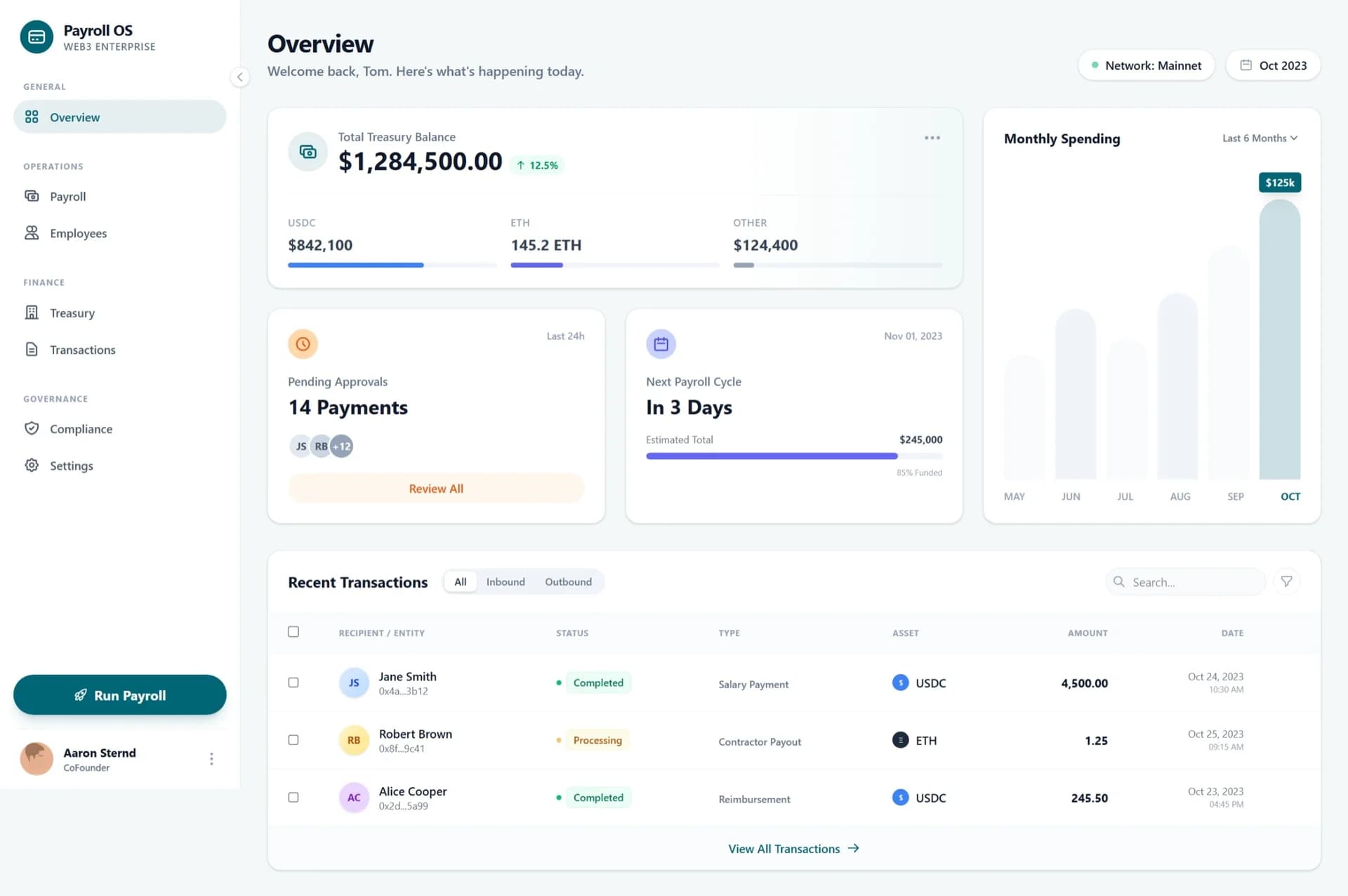
We architected a blockchain-native payroll system that integrates directly with the client's existing smart contracts across Ethereum, Polygon, Arbitrum, Optimism, Base, Avalanche, and Solana. Custom listener services index on-chain revenue events in real-time, automatically calculating protocol fee deductions and payee allocations based on configurable split percentages, salary schedules, or milestone triggers. The Bun.js distribution engine batches transactions for gas optimization and executes payouts through secure keeper networks, while a Next.js dashboard provides complete visibility into payment history, pending distributions, and tax-ready reporting. The entire system operates without custodial access to funds — payroll executes through audited smart contracts that the client controls.
From disconnected work
to one live system.
Fewer handoffs, faster decisions, and one source of truth connecting the teams, devices, and workflows that used to drift apart.
Architecture Built
For the Outcome.
Each technical decision maps to a business constraint: speed, resilience, scale, privacy, or long-term maintainability.
 EVM Core
 Solana
 Dashboard


 API Layer
“We chose to build separate distribution engines for EVM and Solana rather than force-fitting an abstraction — the execution models are fundamentally different and contributors deserve native performance on both.”
— Principal Engineer, KreativeTek Solutions
EVM CoreSolanaDashboardAPI Layer“We chose to build separate distribution engines for EVM and Solana rather than force-fitting an abstraction — the execution models are fundamentally different and contributors deserve native performance on both.”
— Principal Engineer, KreativeTek Solutions
From Manual Chaos to On-Chain Certainty
Delivered in 14 weeks across discovery, architecture, and multi-chain deployment
Payroll Discovery
Weeks 1–2Multi-Chain Architecture
Weeks 3–5Smart Contract Development
Weeks 6–10Backend & Dashboard Build
Weeks 11–13Mainnet Launch & Handoff
Week 14
Numbers That Pay Off
Measured outcomes 60 days post-mainnet deployment across all supported chains


Before vs. After
The transformation eliminated manual payroll as a bottleneck — the client now operates with on-chain certainty while their team focuses on protocol growth instead of spreadsheet reconciliation.
Pay Period Processing Time
Payment Error Rate
Contributor Churn
Gas Costs per Distribution
Audit Trail Completeness
Verified production metrics from the live engagement. Details withheld where required by NDA.

Ready to Automate Your On-Chain Payroll?
Let's explore how smart contract-native distribution can transform your contributor operations.